

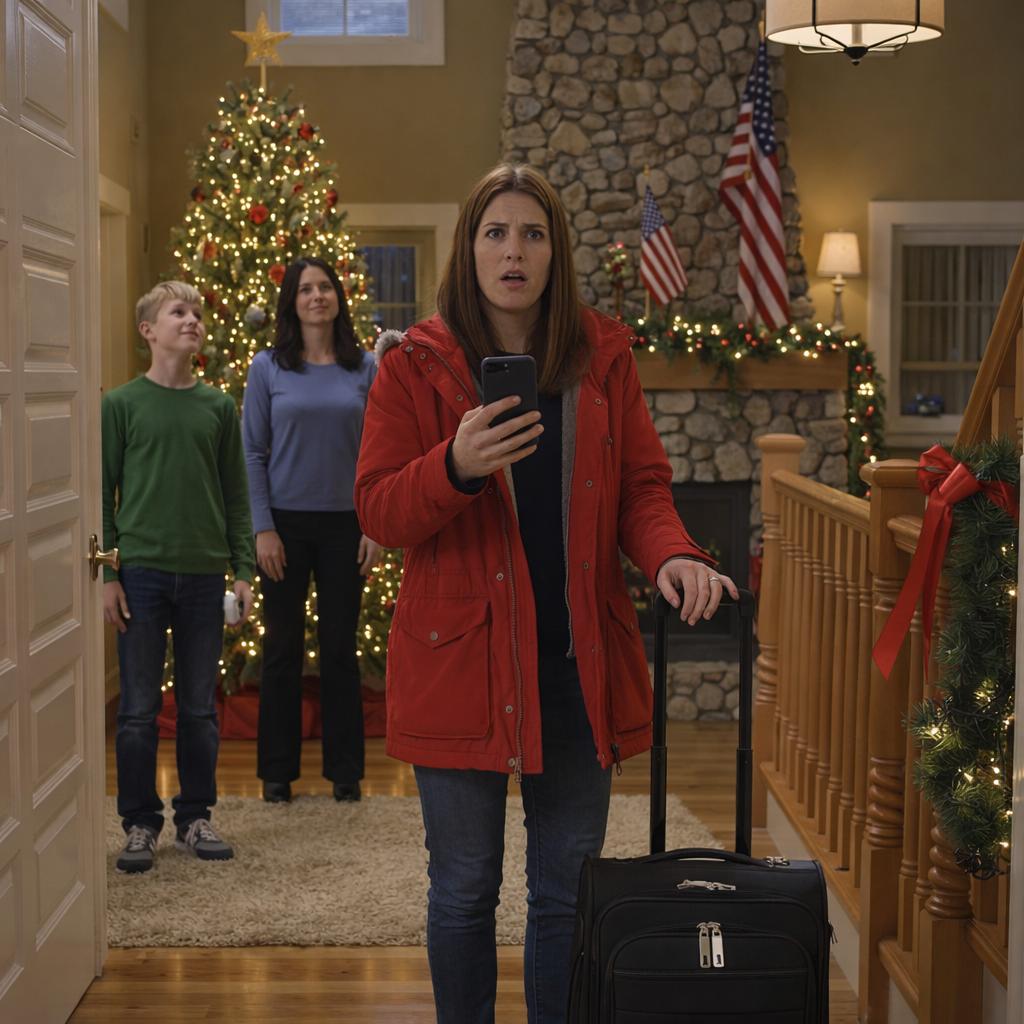
Pozwoliłam spojrzeniu przesunąć się z matki na brata i z powrotem.
Czekali na eksplozję. Przygotowywali się na znajomy schemat: ja zły, oni urażeni, ja przepraszam, oni triumfują.
Zamiast tego robiłem to, co zawsze robiłem na posiedzeniach konferencyjnych, gdy ktoś myślał, że może mnie zastraszyć.
Zamilkłem.
I wtedy przemówiłem.
Sześć słów.
Proste, kontrolowane, niemal delikatne.
"Umowa nie była na moje nazwisko."
Twarz mojej mamy zmieniła się tak szybko, że mnie to przestraszyło.
Autorytet zniknął z jej twarzy, jakby ktoś wyciągnął wtyczkę. Jej usta się rozchyliły. Jej oczy rozszerzyły się i po raz pierwszy od momentu, gdy wszedłem do środka, wyglądała na niepewną.
Uśmiech Milesa zniknął. Zmarszczył brwi. Na jego twarzy pojawiło się zmieszanie niczym gasnąca żarówka.
Przez chwilę nikt się nie ruszał. Nawet powietrze nie.
Cisza była na tyle gęsta, że można było ją wyczuć.
Moja mama przełknęła ślinę. "O czym ty mówisz?" powiedziała, ale jej głos się zmienił. Mniej ostre. Mniej pewna.
Podszedłem do stołu kuchennego, odłożyłem paszport na drewno z cichym stuknięciem. Wytłoczona pieczęć łapała światło.
"Mówię o kontrakcie," powiedziałem. "Ten, którego myślisz, że rozumiesz, bo usłyszałeś ten numer."
Miles się zaśmiał, ale był to cienki śmiech. "Próbujesz nas przestraszyć."
"Tłumaczę," powiedziałem.
Wyciągnąłem telefon, przesuwałem ekrany, aż znalazłem to, czego potrzebowałem, a potem obróciłem go tak, żeby mogli zobaczyć. Zdjęcie bankowe. Nie dramatyczne, nie teatralne, po prostu chłodne numery. Czyste linie.
"Podczas tej podróży," powiedziałem, "nie miałem nic płynnego na moich osobistych kontach. Nie dlatego, że byłem spłukany. Bo chronię swoje aktywa."
Oczy mojej mamy przebiegały po ekranie. "Dlaczego to zrobiłeś?"
Spojrzałem na nią. "Dlaczego tak myślisz?"
Her face tightened, and I saw something flicker there, something that might have been recognition, quickly buried beneath indignation.
“The deal is structured through the company,” I continued. “Which means certain assets tied to my personal registration are listed in ways you clearly didn’t bother understanding before you decided to use them as a cash machine.”
Miles shifted. His arms uncrossed, then crossed again, like he couldn’t find a posture that made him feel safe.
“What does that even mean?” he demanded. “It’s a car.”
I held his gaze. “It means it wasn’t just a car. It was collateral.”
My mother made a small sound, like a breath caught in her throat. “Collateral for what?”
“For an international contract,” I said. “One you don’t get to tamper with.”
The color drained from her face.
Miles’s mouth opened, then closed. His throat bobbed as he swallowed.
I didn’t raise my voice. I didn’t need to. I let the words sit there, heavy and inevitable.
“If auditors come asking questions,” I said, “they won’t care about your intentions. They won’t care that you thought I had enough. They will care that you signed away secured property without authorization.”
My mother’s hand flew to her mouth.
Miles cursed under his breath, a harsh whisper.
I watched them both, and for a second I felt something that surprised me.
Not satisfaction.
Not triumph.
A kind of bleak relief.
Like finally, finally, they were looking at me as if my life had weight.
My mother sank into a chair as if her legs had quit. She gripped the edge of the table, knuckles whitening.
“You’re lying,” she said, but her voice shook.
I shook my head once. “I don’t lie about contracts.”
Miles’s eyes darted toward her, then back to me. “Auditors aren’t going to come because of a car,” he snapped, trying to sound confident.
I said nothing.
Silence is a mirror. People fill it with their own fear.
My mother’s lips moved as if she were trying to find a sentence that could fix this. “We can undo it,” she whispered. “It’s temporary. We’ll just… we’ll get it back.”
“Can you?” I asked.
Miles stiffened. “Of course we can.”
I looked at him. “Then why did you need it so badly you took it while I was out of the country?”
His jaw tightened. “Because I needed capital,” he snapped. “Because businesses require money. You wouldn’t understand that.”
I stared at him for a long beat. Then I said, very softly, “I understand money. I understand risk. And I understand consequences.”
My mother’s eyes shone with panic now. “Savannah,” she said, and the way she used my childhood name was suddenly desperate, like she wanted to pull me back into my old role. “Please. Don’t make this into something it isn’t.”
I felt something in me harden.
I reached for the handle of my suitcase.
Miles pushed off the wall. “Don’t be dramatic,” he said quickly. “We can figure this out. You’re always so intense.”
Intense.
Dramatic.
Selfish.
They had a whole vocabulary for dismissing me when I stopped being convenient.
I pulled the suitcase toward the front door. The wheels clicked over the threshold.
My mother stood abruptly, chair scraping. “Where are you going?”
I paused in the doorway and looked back at them.
The kitchen light made their faces look older. Softer. Not in kindness. In vulnerability.
“I’m going to my apartment,” I said. “And I’m going to let professionals handle what you’ve done.”
My mother’s voice sharpened again, panic turning into anger the way it always did. “You’re really going to punish us for helping your brother?”
I looked at her. “You didn’t help him. You stole from me.”
Miles’s face flushed. “It’s not stealing if it stays in the family.”
I almost laughed. “That’s not how ownership works.”
My mother stepped forward, eyes blazing. “You’re acting like we did this to hurt you.”
“You did,” I said, and I kept my voice calm because I refused to give her the satisfaction of calling me hysterical. “You did it because you didn’t think it would matter. Because you assumed I’d swallow it like I always have.”
Her mouth trembled.
For a moment, no one spoke. The refrigerator hummed. A clock ticked somewhere down the hall.
Then I turned and left.
The air outside was colder than I expected. It filled my lungs with sharpness. The sky looked heavy with clouds, the kind that promised snow.
As I walked down the front steps, suitcase bumping behind me, I realized my hands were still shaking. Not from fear now. From adrenaline. From grief.
The car I’d bought for myself wasn’t the only thing they’d taken.
They’d taken the last fragile thread of hope I’d still carried, the hope that maybe one day they’d see me as more than a resource.
I loaded the suitcase into the rental and sat behind the wheel, staring at the house.
In the front window, my mother’s silhouette moved. She stood there watching, arms crossed, posture rigid, as if she could still posture her way into being right.
Miles didn’t appear. He was probably already calculating the next excuse, the next way to make this my fault.
I started the engine.
As I drove away, my phone buzzed.
A text from Fern.
“You okay?”
I didn’t answer.
I wasn’t sure what okay even meant anymore.
That night in my apartment, I showered until my skin turned red. I stood under the spray with my head bowed, letting the hot water pound my shoulders as if it could knock the day out of me.
It didn’t.
When I crawled into bed, exhaustion wrapped around me, but my mind stayed sharp, restless. I stared at the ceiling and listened to the city outside, distant sirens and passing cars, the sound of other lives continuing.
At some point near dawn, my phone rang.
I jolted, heart slamming.
A number I didn’t recognize.
I answered with a voice that didn’t sound like mine. “Hello?”
“Ms. Kaine?” a polite voice asked. “This is regarding a collateral issue tied to vehicle registration. We need clarification immediately.”
The words slid under my skin like ice.
My throat went dry. I sat up slowly, pulling the sheet around my waist.
“Yes,” I said, voice steady. “I can clarify.”
There was a pause. Papers rustled on the other end.
“It appears there was a pawn transaction processed without the appropriate authorization,” the voice continued carefully. “We need to confirm whether it was approved by you.”
I closed my eyes for a second.
This was it.
Not my mother’s living room. Not my brother’s smug grin.
The real world. The one that didn’t care about family dynamics.
“I was out of the country,” I said. “I did not authorize it. And I can provide proof of my travel and documentation by noon.”
The silence on the other end was different now. Sharper. More serious.
“So,” the voice said slowly, “you’re stating your family acted without your consent.”
“Yes,” I replied. “And you will need to speak directly with the parties involved.”
Another pause.
“Thank you, Ms. Kaine,” the voice said, now brisk. “We will proceed accordingly.”
When the call ended, I sat there for a long moment, phone still in my hand.
The dawn light crept across my bedroom wall, pale and cold.
I thought of my mother’s words.
He needed it more.
You’ve always had enough.
My stomach tightened, but beneath the anger was something steadier now.
A decision.
I got out of bed, made coffee I barely tasted, and opened my laptop. I began pulling records, statements, travel confirmations, every piece of documentation that could form a clean chain of truth.
Not because I wanted revenge.
Because I was done paying for their choices.
And as the city outside my window woke up, trains rattling in the distance and traffic building like a rising tide, I realized something that made my hands stop shaking.
They had moved first.
But the board was mine now.
The morning moved with a strange, deliberate calm.
I sent the documentation by noon, just as I’d promised. Boarding passes. Passport stamps. Time-stamped emails placing me in three different countries while my car was being pawned back home. Bank statements showing the deliberate emptiness of my personal accounts during the deal window. Contracts, appendices, clauses my parents had never read and my brother had never bothered to understand.
I didn’t add commentary. I didn’t plead. I didn’t explain.
Facts were enough.
By early afternoon, my phone buzzed again. Not a call this time. An email marked URGENT.
Unauthorized transfer of secured collateral
Immediate investigation initiated
I leaned back in my chair and closed my eyes.
For years, I had been told I was dramatic. That I overreacted. That I made things bigger than they needed to be. But when institutions moved, when paperwork aligned, when consequences finally arrived wearing suits instead of family faces, no one called it drama anymore.
They called it procedure.
The first knock came at my parents’ house around ten the next morning.
I didn’t have to be there to see it. Years earlier, after my brother had “borrowed” my spare key and my mother waved it off as nothing, I’d quietly installed security cameras. My mother had laughed when she found out.
“Who are you hiding from?” she’d asked, amused.
No one, I’d thought at the time. I’m just learning.
The footage streamed to my phone now in crisp clarity.
My mother opened the door wearing her favorite cardigan, hair perfectly set, smile already fixed into place. She looked like a woman greeting neighbors for a holiday brunch, not someone about to have her life audited.
Two people stood on the porch. A man and a woman, both holding leather portfolios, expressions professionally neutral.
“Mrs. Cain?” the woman asked.
“Yes,” my mother replied, still smiling. “How can I help you?”
“We’re here regarding a discrepancy involving collateral registered under Ms. Valerie Kaine.”
My mother’s smile faltered, just slightly. “There must be some mistake. It was just a car.”
The man glanced down at his notes. “Ma’am, that vehicle was tied to an international financial agreement. This is not a minor matter.”
The word international landed like a dropped plate.
My mother’s lips parted. “I don’t understand.”
“That’s why we’re here,” the woman said calmly. “May we come in?”
Kamera uchwyciła moją matkę cofnącą się, jej ruchy nagle sztywne. Jej salon wydawał się mniejszy, gdy byli w nim obcy, a starannie ułożone meble nie dawały już ochrony.
Kilka minut później w kadrze pojawił się Miles.
Wszedł z tą samą pewnością siebie, którą zawsze miał, ramiona wyprostowane, szczęka zaciśnięta, już gotowy, by oczarować się przez kłopoty.
"Hej," powiedział, wymuszając uśmiech. "Co się dzieje?"
Mężczyzna spojrzał w górę. "Czy jesteś Miles Cain?"
"Tak."
"Czy podpisałeś dokumentację zastawu dla pojazdu zarejestrowanego na Valerie Kaine?"
Miles zawahał się. Tylko o chwilę za długo.
"Zrobiłem to," powiedział w końcu. "Za zgodą rodziny."
Długopis kobiety zatrzymał się w połowie strony. "Będziemy potrzebować pisemnej autoryzacji."
Głos mojej mamy zadrżał. "To moja córka."
"To nie jest zgoda," odpowiedziała kobieta spokojnie.
Obserwowałem, jak pewność siebie mojego brata opada na żywo. Jego ramiona opadły. Jego ręce nerwowo się poruszały. Spojrzał na mamę, jakby mogła go uratować, tak jak zawsze.
Nie odezwała się.
Po raz pierwszy w życiu stanął samotnie przed konsekwencjami.
Nagrałem na telefonie i wszystko nagrałem. Nie z okrucieństwa. Z konieczności. Dowód stał się moją zbroją.
Tego wieczoru wróciłem.
Nie dlatego, że musiałem się z nimi konfrontować. Bo potrzebowałem zamknięcia.
Dom wydawał się inny w chwili, gdy wszedłem do środka. Ciszej. Mniejsze. Powietrze ciężkie od czegoś niewypowiedzianego.
Mój ojciec siedział w fotelu, z założonymi rękami i zaciśniętą szczęką. Wyglądał na starszego, niż go pamiętałem, zmarszczki wokół oczu głębsze, postawa mniej pewna.
Moja mama siedziała przy kuchennym stole, z opuszczonymi ramionami i czerwonymi oczami. Miles stał przy oknie, z założonymi rękami, chodząc krótko, nerwowo jak zwierzę w klatce.
Nikt się nie odezwał, gdy wszedłem.
Odłożyłem telefon na stół i nacisnąłem play.
Głos mojego brata wypełnił pokój.
"Słuchaj, oddamy to. Naprawimy to. Nie wniesie oskarżenia."
Nastąpiła cisza, gęsta i oskarżycielska.
Przerwałem nagrywanie.
"Tym razem," powiedziałem cicho, "cena nie będzie moja do zapłacenia."
Miles obrócił się w moją stronę. "Nie odważyłbyś się tego oddać."
"Już to zrobiłem," odpowiedziałem.
Moja mama gwałtownie wstała. "Valerie, proszę. Nie wiedzieliśmy, że jest powiązany z czymś większym. Myśleliśmy, że to tylko samochód."
Tylko samochód.
Poczułem, jak coś zimnego osiada w mojej piersi.
"Ten samochód był zabezpieczony," powiedziałem. "Co oznacza, że ingerowałeś w aktywny międzynarodowy kontrakt. Masz pojęcie, co to oznacza?"
Ojciec w końcu przemówił, jego głos był niski i ostry. "Naprawisz to."
Odwróciłem się do niego. "Nie."
Zmarszczył brwi, jakby to słowo nie pasowało do moich ust. "Wychowaliśmy cię."
"Wychowałaś mnie, żebym przeżył," powiedziałem. "I właśnie to robię."
Miles uderzył pięścią w blat. "Podoba ci się to."
Spotkałem jego wzrok. "Mam dość ratowania cię."
Wtedy strach w końcu zastąpił jego złość.
Następne czterdzieści osiem godzin szybko się rozpadło.
Konta zamarły. Telefony pozostawały bez odpowiedzi. Sprzedawcy się wycofali. Klienci wyciągali kontrakty. To, co kiedyś było przedstawiane jako impet, okazało się długiem trzymanym razem przez optymizm i moją milczenie.
Wiadomości zalewały mój telefon.
Od mojej matki, błagającej.
Od mojego ojca, wymagający.
Od mojego brata, oscylującego między wściekłością a desperacją.
Potem pojawiły się oskarżenia.
Samolubne. Zimno. Niewdzięczny.
Usunąłem je wszystkie.
Trzeciego dnia pojawiły się nagłówki.
Lokalny przedsiębiorca pod śledztwem w sprawie nadużyć finansowych Członkowie
rodziny zamieszani w nieautoryzowaną transakcję zabezpieczenia
Zdjęcie mojego brata patrzyło na mnie z ekranu, jego wyraz twarzy był sztywny, pewność siebie zniknęła. Poniżej widniało nazwisko mojej matki, wymienione jako poręczyciel.
Po raz pierwszy w życiu szepty nie dotyczyły mnie.
Chodziło o nich.
Spodziewałem się czuć triumfu.
Zamiast tego czułem ciszę.
Jakby coś ciężkiego, co nosiłem od dzieciństwa, w końcu zostało odłożone.
Tego wieczoru uczestniczyłem w gali organizowanej przez firmę stojącą za europejskim kontraktem. Kryształowe żyrandole. Biały len. Wypolerowane uśmiechy.
Beatrice Holloway znalazła mnie przy barze i ścisnęła mi ramię.
"Dobrze sobie poradziłaś," powiedziała. "Całość."
Była moją mentorką, gdy jeszcze pożyczałam marynarki i udawałam, że się nie boję. Nauczyła mnie, jak się chronić bez przepraszania.
Po raz pierwszy brawa wydawały się zasłużone.
Po drugiej stronie miasta światła w biurze mojego brata zgasły.
Trzy dni później moja mama stała przed drzwiami mojego mieszkania.
Żadnych pereł. Bez makijażu. Po prostu zmęczenie.
"Straciliśmy wszystko," wyszeptała, gdy ją otworzyłam. "Proszę, przestań."
Studiowałem ją. Ta kobieta, która mówiła mi, że zawsze mam dość. Który traktował moją siłę jako pozwolenie na branie.
"Nie zgubiłeś tylko mojego samochodu," powiedziałem cicho. "Zgubiłaś mnie."
Sięgnęła po mnie. Cofnąłem się.
I zamknęła drzwi.
Cisza potem nie była pusta.
To była wolność.
Mijały tygodnie.
Śledztwo zakończyło się. Umowa pozostała nienaruszona. Pojazd został odzyskany i oczyszczony. Moja firma podziękowała mi za "szybkie, profesjonalne podejście", jakby moje życie osobiste nie zostało przeciągnięte przez ogień.
Wróciłem do salonu w spokojne popołudnie.
Nie z przekory.
Dla siebie.
Podpisałem papiery pewnymi rękami i pojechałem wzdłuż jeziora zamiast w stronę dzielnicy moich rodziców. Woda rozciągała się szeroko i niespokojnie obok mnie, odbijając niebo niczym młotkowane srebro.
Mój telefon raz zawibrował.
Wiadomość od mojej mamy.
Mam nadzieję, że wszystko u ciebie w porządku.
Bez poczucia winy. Brak popytu.
Nie odpowiedziałem.
Nie musiałem.
W końcu nauczyłem się czegoś, czego moja rodzina nigdy mnie nie nauczyła.
Miłość, która kosztuje twoją godność, nie jest miłością.
A posiadanie wystarczająco dużo nie oznacza, że ludzie mogą od ciebie brać.
To znaczy, że wiesz, kiedy odejść.
Aby zobaczyć pełną instrukcję gotowania, przejdź na następną stronę lub kliknij przycisk Otwórz (>) i nie zapomnij PODZIELIĆ SIĘ nią ze znajomymi na Facebooku.