
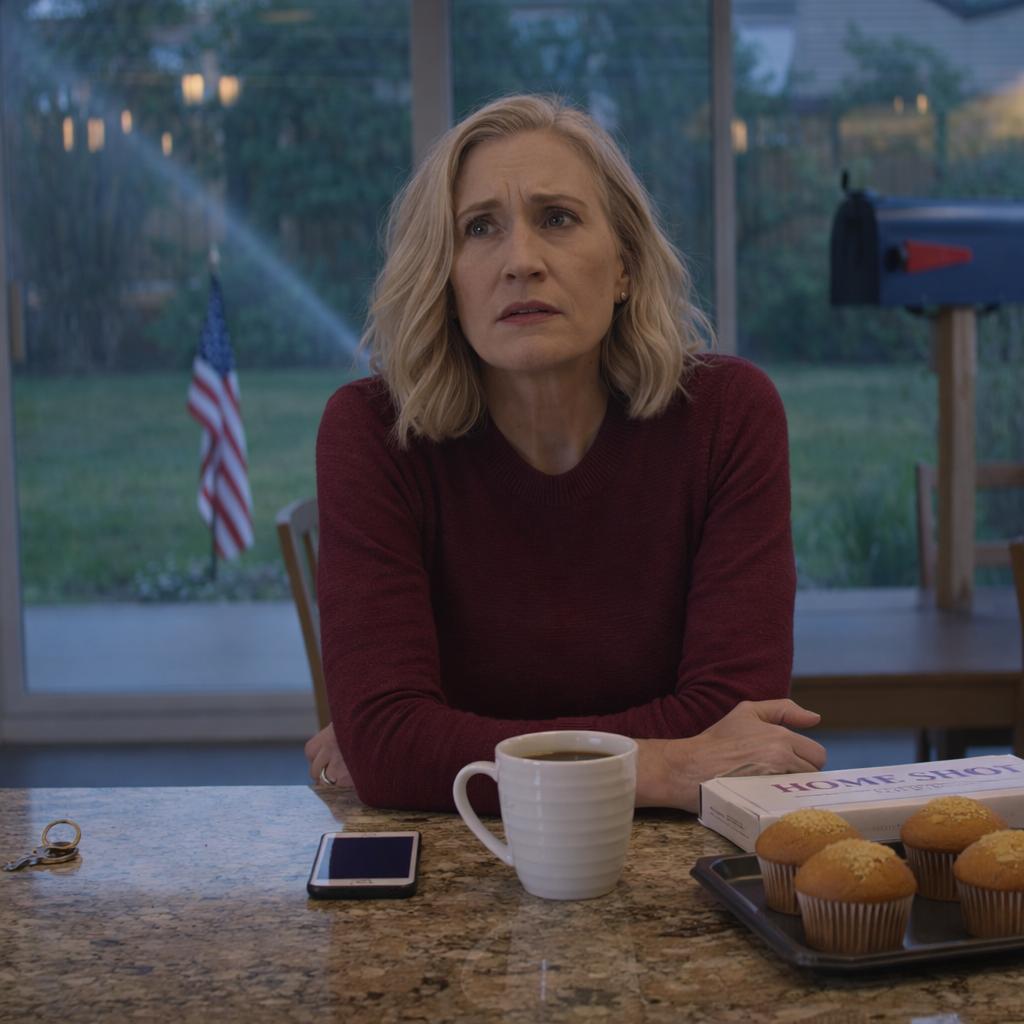
Connie skinęła głową. "Russell poprosił, aby informacje pozostały prywatne przez trzydzieści dni po jego śmierci. Przewidywał presję."
Presja. Takie uprzejme słowo na to, co robił Donald.
"Jest tego więcej," powiedziała Connie, przesuwając do mnie kremową kopertę. "Russell poprosił mnie, żebym przekazał ci to dokładnie miesiąc po jego śmierci. Dziś jest ten dzień."
Moje ręce drżały, gdy ją otwierałem, bo jego pismo wciąż mnie rozbijało. Czuł się jak duch sięgający przez papier.
List był krótki, ale każda linijka niosła głos Russella. Spokój. Bezpośredni. Ochronny.
Powiedział, że jestem zdolny. Powiedział mi, żebym nie pozwoliła, by nasze dzieci uczyniły ze mnie problem do rozwiązania. Przypomniał mi, że wybór należy do mnie.
A potem dodaję postscriptum.
Klucz do Hiszpanii kryje się za zdjęciem Wenecji.
Przełknąłem ślinę. Connie obserwowała moją twarz z cichym zrozumieniem, pozwalając mi mieć chwilę.
"Jesteś pierwszą wdową, jaką widziałam, która wygląda na bardziej opanowaną po przeczytaniu listu od męża," powiedziała łagodnie.
"Bo widział mnie wyraźniej niż ja kiedykolwiek widziałem siebie," odpowiedziałem.
Connie przesunęła do mnie kartę bankową.
"Russell też poprosił mnie, żebym ci to dała," powiedziała. "Konto, które otworzył w zeszłym roku. Nazywał to waszym funduszem na niezależność."
"Ile?" Zapytałem, niemal bojąc się odpowiedzi.
"Pięćdziesiąt tysięcy," powiedziała Connie. "Wpłacał do niej co miesiąc."
Pięćdziesiąt tysięcy dolarów, o których nigdy nie wiedziałem, że istnieją. Prywatna poduszka stworzona nie na wypadek nagłych wypadków, lecz na ucieczkę.
Kiedy wychodziłem z gabinetu Connie, zimowe powietrze wydawało się ostrzejsze, czystsze. Mój żal nie zniknął, ale już nie czuł się jak mgła. Czułem, że to coś, co noszę z zamiarem.
W drodze do domu zadzwonił mi telefon.
Darlene.
Prawie pozwoliłem, by przeszło na pocztę głosową. Potem odebrałem, bo chciałem usłyszeć, co według niej ma prawo powiedzieć.
"Mamo," zaczęła radośnie, zbyt radośnie, "tak się cieszę, że cię złapałam. Donald powiedział mi, że wciąż się wahasz co do domu, ale słuchaj, mamy plan. Lisa zna wykonawcę, który potrafi wyremontować piwnicę, zamontować aneks kuchenny. Miałbyś własne małe mieszkanie. Będzie idealnie."
Perfect. Like she was designing a storage unit.
“How thoughtful,” I said.
“And don’t worry about the cost,” she continued. “We’ll deduct it from the house sale proceeds. It’s an investment in your comfort.”
My comfort. Not my independence. Not my happiness.
“Darlene,” I asked quietly, “when was the last time you called me just to ask how I was doing?”
A pause.
“What do you mean?”
“I mean a call where you didn’t want something,” I said. “Where you asked about my grief. About my sleep. About whether I’m eating. About whether I miss my husband.”
Her voice tightened. “Mom, you’re being unfair. You know how busy I am.”
“Kathleen’s school expenses?” I asked.
“Yes,” she said quickly, grateful for the new direction. “Tuition, room and board, books, her sorority—”
“I’ve been sending Kathleen five hundred dollars a month,” I said. “For two years.”
Silence.
“Twelve thousand dollars,” I continued. “Does Kathleen know it comes from me?”
“Of course she knows you help,” Darlene said carefully.
“Does she know the amount?” I asked.
“I don’t see why those details matter.”
They mattered because truth mattered. Because invisibility was the tool they used to keep taking without accountability.
“She doesn’t know,” I said softly. “And you’re fine with that.”
My daughter’s voice sharpened. “Mom, why are you doing this? Why are you suddenly keeping score?”
“I’m not keeping score,” I replied. “I’m finally looking at the pattern.”
She exhaled hard. “You’re emotional. That’s normal. But don’t make decisions you’ll regret.”
I smiled, even though she couldn’t see it. “I’m making a decision I should’ve made years ago.”
I hung up.
At home, I moved quickly, quietly.
Not in panic. In precision.
I took the key from behind the Venice photo and slipped it into my purse. I printed the property management contact details for Marbella. I emailed Pilar Rodríguez, introducing myself, asking if the house was ready, asking what I needed to do to settle in.
Her reply came within hours, warm and immediate. She told me the garden was thriving, that she checked the house weekly, that Russell spoke of me often.
It made me cry, standing at my kitchen counter, because a woman in Spain who barely knew me spoke of Russell with more tenderness than my own children had spoken of him since he died.
Then I did something I hadn’t expected to do.
I packed my children’s things.
Not my own.
Donald’s childhood trophies. His school papers. The baseball glove Russell bought him when he was ten. Darlene’s cheerleading medals. Her piano books. Her framed graduation photo.
I labeled boxes neatly with their names. Not out of spite. Out of clarity.
This house was full of their memories, but they had treated it like a bank account. If they wanted the money, they could have the weight of their own history too.
On the fourth morning, I hired movers.
It wasn’t cheap, but the independence fund made it feel almost satisfying. Russell had known I’d need money that didn’t require permission.
The lead mover asked, “Where are these going, ma’am?”
I handed him two addresses.
“One set to Donald Draper,” I said. “One to Darlene.”
He glanced at the labels, then at my face, then nodded without comment. He’d seen enough families to know better than to ask questions.
While the movers carried boxes down the stairs, my phone buzzed with Donald’s name.
He didn’t call. He texted, as if he could control me better through a screen.
Mom. What are you doing? Why are there movers?
I didn’t respond.
I kept packing.
Not boxes.
My life.
The day before my flight, I walked through the house one last time at dusk.
Russell’s chair sat by the fireplace. Our wedding photo hung in the hallway. The kitchen still held the faint smell of coffee and casserole. In the living room, sunlight faded across the rug where Kathleen used to sprawl with coloring books.
My grief rose sharply, a sudden ache that made me press a hand to my chest.
But beneath it, there was something else.
Relief.
Because for the first time since Russell’s death, I wasn’t waiting for someone else to tell me what happens next.
That night, I slept lightly, suitcase by the bedroom door.
At 6:12 a.m., my phone buzzed again.
A text from Donald.
Start packing. This house belongs to someone else now.
I stared at the words until my eyes stopped seeing them as letters and started seeing them as what they truly were.
A declaration of ownership.
Not of the house.
Of me.
I didn’t reply.
I just smiled.
Because I had already packed.
And what I was taking with me wasn’t in any of those boxes.
The plane lifted off just after sunrise.
I watched the runway fall away beneath us, the gray lines shrinking into something abstract and harmless, and felt a strange stillness settle over me. Not numbness. Not relief exactly. More like the quiet that comes after you’ve made a decision so final your body no longer needs to argue with it.
For the first time since Russell died, I slept.
Not the shallow, startled sleep of grief where every sound jerks you awake, but a deep, dreamless rest that left my muscles loose and my breathing slow. When I opened my eyes again, the cabin lights were dimmed and the Atlantic stretched endlessly beyond the window, blue and unbothered by human drama.
I thought about Donald’s text.
This house belongs to someone else now.
He had sent it with the confidence of a man who had never once imagined being wrong.
I wondered how long it would take before reality caught up to him.
Madrid greeted me with warmth and order. The customs officer stamped my passport, glanced up with a polite smile, and waved me through like I belonged there. No questions. No scrutiny. No suspicion that I was a woman who had just quietly dismantled the version of her life everyone else thought they owned.
On the drive south toward Marbella, the landscape changed slowly. Flat stretches gave way to rolling hills, olive groves, white villages clinging to slopes like they’d grown there naturally. Pilar talked gently as she drove, pointing out landmarks, explaining the rhythms of the area, telling me which bakeries opened early and which cafés locals avoided because they catered only to tourists.
“You will like it here,” she said. “This place has patience. It doesn’t rush people.”
When we reached the house, I stepped inside like someone crossing a threshold that had always existed, just waiting for me to notice it.
The cool tile under my feet. The lemon scent drifting through open windows. The quiet hum of cicadas in the distance. It wasn’t grand. It wasn’t flashy.
It was enough.
That first week passed gently.
I learned the village layout. Bought groceries from a woman who insisted I try three kinds of olives before choosing. Sat at the same café each morning with strong coffee and warm bread, watching people greet each other by name. I walked along the promenade in the evenings, letting the sea air tangle my hair, thinking about nothing more urgent than where to eat dinner.
My phone stayed off.
On the eighth day, curiosity nudged me. Not anxiety. Just curiosity.
I turned my phone back on.
The screen exploded.
Missed calls. Voicemails. Texts stacked on top of each other like a digital avalanche.
Donald. Darlene. Lisa. Even my sister-in-law’s number flashed among them.
I didn’t open anything right away. I set the phone face down on the terrace table and poured myself a glass of wine. Only when the sun dipped low and the sky turned soft pink did I finally listen.
Donald’s first voicemail was furious.
“What the hell do you think you’re doing? Gregory is livid. You can’t just back out of a sale like this. There are contracts in motion.”
The second was panicked.
“Mom, call me back. This is serious. The buyer wants an explanation. We need to talk now.”
The third had shifted tone.
“Mom… please. You’re embarrassing us. People are asking questions.”
By the sixth voicemail, his voice was tight and uncertain.
“Mom, the buyer’s lawyer says the house isn’t even eligible for sale without… something’s wrong with the deed. Gregory says your name is the only one on it. What does that mean?”
I smiled into my wine.
Darlene’s messages followed a similar arc.
First outrage. Then confusion. Then indignation.
Finally, fear.
“Mom, Donald says you’ve been hiding things. That there’s a trust? That Dad set something up? Why wouldn’t you tell us?”
Why wouldn’t I tell you.
The question echoed in the warm Spanish air like a joke that didn’t need answering.
I didn’t respond that night.
The next morning, I walked down to the market, bought fresh tomatoes and cheese, and made myself breakfast on the terrace. A small lizard darted across the stone wall. Somewhere, a church bell rang.
Only after I’d eaten did I call Connie West.
“I assume they’ve figured it out,” she said calmly when I explained.
“They’re spiraling,” I replied. “It’s almost impressive.”
Connie chuckled softly. “They’ve requested copies of the trust documents.”
“And?” I asked.
“I informed them all communication must go through me. They’re… unhappy.”
“Good,” I said. “What happens next?”
“Nothing,” Connie replied. “They have no legal standing. The house is yours. Always was. And the trust is airtight.”
I exhaled slowly, feeling something loosen in my chest.
“What about harassment?” I asked.
“If it continues,” she said, “we can send a cease-and-desist. But honestly, Michelle, this will burn itself out once they accept reality.”
Accept reality.
That was something my children had always struggled with when reality didn’t align with their expectations.
That afternoon, Kathleen called.
I answered immediately.
“Grandma,” she said, breathless. “I heard.”
“Heard what?” I asked gently.
“That you didn’t sell the house. That Uncle Donald lost his mind. That Mom is furious. That you’re in Spain.”
I laughed softly. “News travels fast.”
“Mom told me you were having some kind of… episode,” Kathleen said. “That grief made you irrational.”
“And what do you think?” I asked.
There was no hesitation.
“I think you finally did something for yourself,” she said. “And I think they’re angry because they can’t control you anymore.”
I closed my eyes, letting the sun warm my face.
“Kathleen,” I said, “do you remember baking cookies in my kitchen when you were little?”
“Of course,” she replied. “You let me eat more dough than cookies.”
“Do you remember how your mother used to hover in the doorway?” I asked. “Watching. Waiting.”
Kathleen sighed. “Yeah. Like she was counting how much space you were taking up.”
“That’s exactly it,” I said. “I took up space. And somewhere along the way, they decided that was unacceptable.”
She was quiet for a moment.
“I’m proud of you,” she said finally. “I know they won’t say it. But I am.”
Her words settled over me like a blessing.
Over the next few weeks, the messages slowed.
Donald sent one final text, stripped of warmth.
You’ve changed. Dad would be disappointed.
I stared at it for a long time before deleting it.
Russell would not have been disappointed.
He would have been relieved.
By the end of the month, I had fallen into a rhythm.
Poranne spacery. Piszę w kawiarni. Długie lunche z Pilar. Lekcje hiszpańskiego dwa razy w tygodniu, podczas których zniekształcałem czasy czasowników i śmiałem się z siebie. Zacząłem spać z otwartymi oknami, pozwalając, by szum morza zastąpił szum niepokoju, który od lat tkwił w mojej piersi.
Pewnego wieczoru, siedząc przy małym biurku w salonie, z otwartym zeszytem i piórem w ręku, uświadomiłem sobie, że już nie piszę o żałobie.
Pisałem o sobie.
Nie jako żona. Nie jako matka. Nie jako babcia, której wartość mierzono w zapiekankach i czekach.
Tylko jako kobieta.
Kilka dni później przyszedł list od Connie.
W środku znajdowała się kopia dokumentu złożonego przez Donalda i Darlene: formalne wyzwanie wobec funduszu powierniczego.
Czytałem ją raz. Potem dwa razy.
Potem się zaśmiałem.
Notatka Connie na dole była krótka.
Nie mają sprawy. Ale jeśli chcesz, żeby to się skończyło na zawsze, możemy.
Zadzwoniłem do niej od razu.
"Co proponujesz?" Zapytałem.
"Deklaracja," powiedziała. "Nie publicznie. Nie dramatyzujące. Po prostu jasne oświadczenie prawne potwierdzające twoją autonomię i intencje. Wyeliminowałoby to wszelkie przyszłe roszczenia."
"Zrób to," powiedziałem bez wahania.
Dwa tygodnie później wyzwanie Donalda zostało oddalone.
Po tym połączenia całkowicie ustały.
Nie było żadnych przeprosin. Brak prób pojednania.
I po raz pierwszy zrozumiałem coś jasno.
Zamknięcie nie zawsze wiąże się z wyrzutami sumienia.
Czasem towarzyszy to cisza.
Mijały miesiące.
Stałam się silniejsza. Lżejszy. Bardziej ja.
Przestałam farbować włosy. Niech szarość pokaże się jak odznaka przetrwania. Nosiłam lniane sukienki i płaskie sandały i nauczyłam się, które wina lubię i które zachody słońca najlepiej oglądać z tarasu, a które z plaży.
Pewnego popołudnia Pilar przyniosła małe oprawione zdjęcie, które znalazła podczas sprzątania starej szuflady biurka Russella w domu obok.
To byłem ja.
Zrobione lata temu, a ja o tym nie wiedziałem. Siedzę przy stoliku w kawiarni, śmieję się, z odchyloną głową do tyłu, promieniami słońca we włosach.
"Wyglądałaś na bardzo szczęśliwą," powiedziała Pilar. "Russell ją zatrzymał."
Przycisnąłem ramkę do piersi i poczułem, jak napływają łzy — nie z bólu, lecz z wdzięczności.
Widział mnie.
Nawet gdy zapomniałem, jak się postrzegać.
W rocznicę śmierci Russella zapaliłem świecę na tarasie i nalałem dwa kieliszki wina. Jedną, którą wypiłem. Stawiam ją obok siebie.
"W porządku," powiedziałem w ciepłą noc. "Miałeś rację."
Wiatr łagodnie się zmienił, poruszając liśćmi drzewa cytrynowca.
W Ohio dom pozostał niesprzedany.
Donald przeprowadził się do mniejszego mieszkania. Darlene przestała w ogóle dzwonić. Kathleen zmieniła szkołę i odwiedziła mnie latem, zostając tam sześć tygodni, ucząc się hiszpańskiego, pomagając mi redagować mój rękopis, odkrywając, kim jest, gdy nikt nie patrzył.
Pewnego wieczoru zapytała mnie: "Tęsknisz za nimi?"
Myślałem o tym.
"Tęsknię za tym, za kogo ich uważałem," powiedziałem. "Nie tym, kim wybrali być."
Skinęła głową. "To ma sens."
Teraz, gdy budzę się rano, nie przygotowuję się na żądania.
Budzę się w świetle. Za cicho. Do świadomości, że moje życie należy do mnie.
Russell zostawił mi coś więcej niż pieniądze i majątek.
Zostawił mi pozwolenie.
I przyjąłem ją.
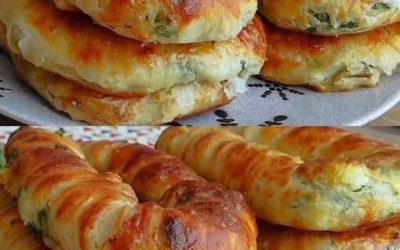
Aby zobaczyć pełną instrukcję gotowania, przejdź na następną stronę lub kliknij przycisk Otwórz (>) i nie zapomnij PODZIELIĆ SIĘ nią ze znajomymi na Facebooku.