

“What were you thinking?” she snapped. “Posting online? Feeding strangers? People are calling us selfish.”
I crossed my arms.
“Then maybe you should ask yourself why.”
My father tried to soften things, explaining that the restaurant felt easier, that it had seemed practical.
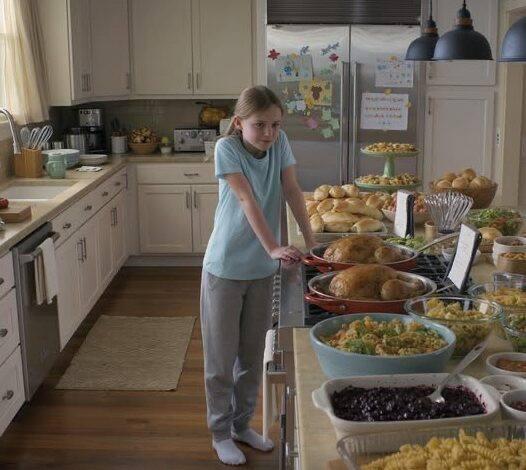
I looked at him and said, “Emily cooked for three days.”
My mother waved it away.
“She’s a child. She’ll get over it.”
Those words landed like a slap.
“She’s your granddaughter,” I said. “And she worked herself to exhaustion for you.”
Emily flinched.
That was when my father finally looked at her.
“We didn’t mean to hurt you,” he said.
“But you did,” I replied.
Drawing the Line
My mother claimed she did not realize how much Emily was cooking.
I told her she never asked.
She turned to Emily and said, “Why didn’t you tell me?”
Emily’s voice barely rose above a whisper.
“I didn’t think I needed to.”
The room felt heavy.
My father admitted they had come because my post made them look bad.
I met his eyes.
“You abandoned your granddaughter,” I said. “That’s why.”
My mother accused me of embarrassing her.
I told her canceling a celebration your granddaughter cooked for and excluding her without warning was embarrassing.
Emily blinked rapidly, holding back tears.
I sent her to the kitchen.
Once she was gone, I said what needed to be said.
Strangers had shown my daughter more appreciation in one night than they had.
Respect was not optional.
When my mother asked what I wanted, I answered without hesitation.
“Respect for my daughter.”
My father understood.
My mother did not.
That was when I told them they were not welcome until they could treat Emily with care and consideration.
My mother stormed out.
My father hesitated, then followed.
The Aftermath and a New Beginning
Emily returned and asked if it was her fault.
I held her close.
“No,” I said. And I meant it.
In the days that followed, neighbors shared photos of her food. Messages of gratitude poured in. Someone asked if she catered. Another offered to pay her for an event.
Emily began researching culinary schools.
Not because she felt pressure.
But because she felt joy.
My mother sent angry messages. I did not respond.
My father left a voicemail apologizing. I did not respond.
Three days later, he came alone.
He apologized properly. To Emily.
He admitted he should have paid attention. That he had failed her.
He handed her a chef’s knife engraved with her initials.
"Dla twojej przyszłości," powiedział.
Emily płakała.
Coś między nimi złagodniało. Nie idealnie. Ale szczerze.
Tej nocy Emily zapytała, czy będzie lepiej.
Powiedziałem jej prawdę.
Tak.
Nie szybko. Nie łatwo. Ale tak.
Czasem rodzina się rozpada.
Czasem się wygina.
A czasem, gdy wybierasz ochronę tego, kto zasługuje najbardziej, przeradza się to w coś silniejszego niż to, co ci dano.
Aby zobaczyć pełną instrukcję gotowania, przejdź na następną stronę lub kliknij przycisk Otwórz (>) i nie zapomnij PODZIELIĆ SIĘ nią ze znajomymi na Facebooku.