

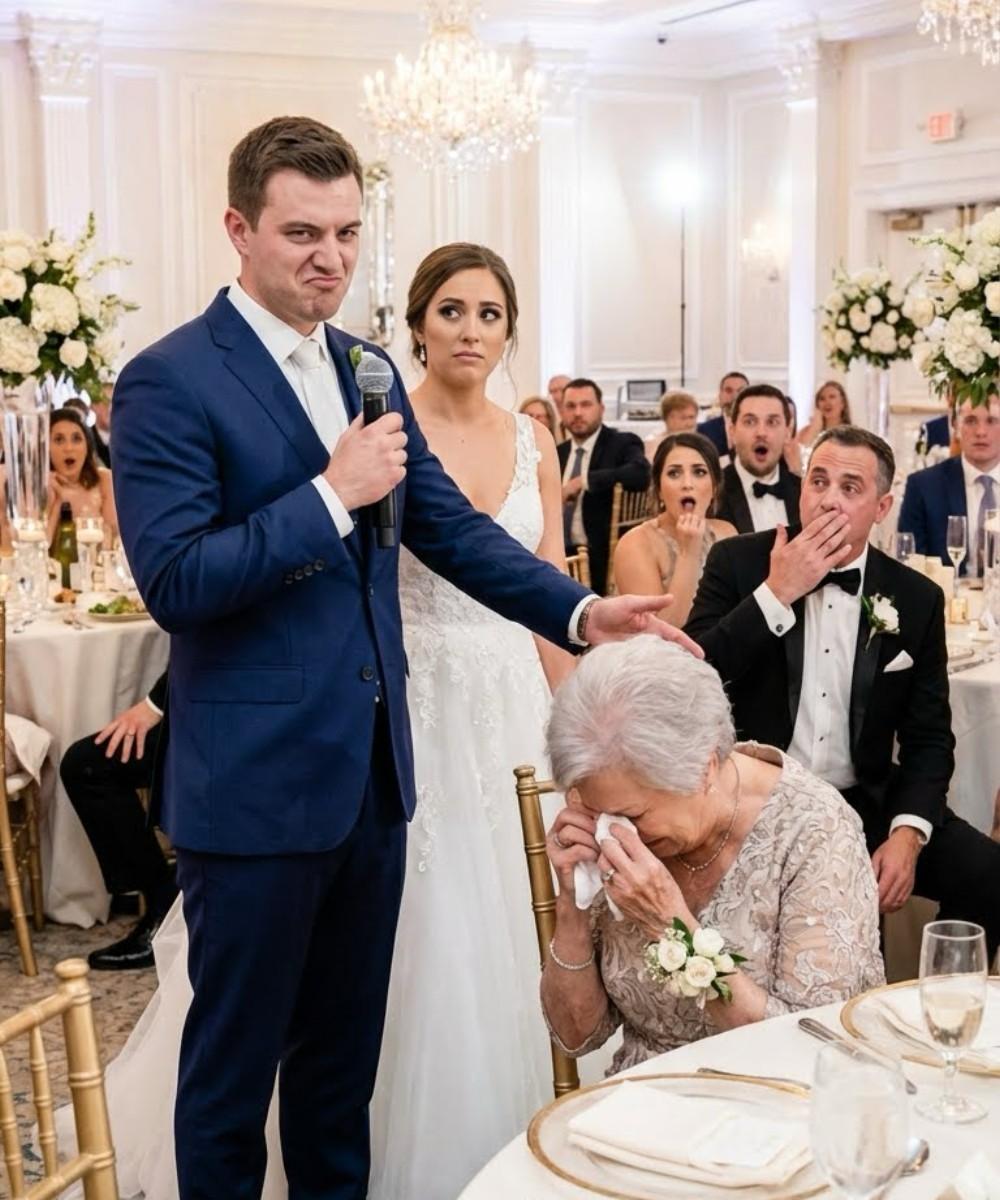
Osiemset czterdzieści tysięcy.
Ethan traktował mnie jak ciężar ponad dziewiętnaście tysięcy.
Pochyliłem się lekko do przodu.
"Panie Miller," powiedziałem, "chcę zaktualizować testament. Natychmiast."
Przyglądał się mojej twarzy. "Oczywiście. Mogę zapytać dlaczego?"
“Because my son announced at his wedding that someone else is his real mother,” I replied. “And then he asked me for more money the next day. I need my retirement planning to reflect reality, not fantasy.”
Mr. Miller took a slow breath and nodded.
“All right,” he said. “Tell me what you want.”
The Decision That Felt Like Air Returning to My Lungs
I had thought I would cry when I said it out loud.
I didn’t.
“I want to remove Ethan as the beneficiary,” I said, keeping my voice even. “I want my assets redirected into a charitable foundation for women who adopt children and raise them without support.”
Mr. Miller’s eyebrows lifted. Not judgmental. Just surprised.
“That is a significant change,” he said carefully. “Are you certain?”
“I am certain,” I answered. “If I am not his mother, then he is not entitled to inherit from me as if I were.”
Mr. Miller nodded and began writing.
“Do you want to leave him anything at all?” he asked, professional but gentle.
I thought for a moment. It wasn’t that I wanted to be harsh. It was that I wanted to be accurate.
“Leave him a letter,” I said. “A formal notice. Let him know the truth. Let him understand that this is not a tantrum. It is an outcome.”
Mr. Miller wrote more notes.
“And I want an updated power of attorney and health directive,” I added. “I want to choose who makes decisions for me if I ever cannot.”
His pen paused.
“Not your son?” he asked, quietly.
I shook my head.
“Not my son,” I said. “He has proven he will choose what benefits him, not what protects me.”
Mr. Miller leaned back in his chair, then nodded slowly.
“Understood,” he said. “We will put everything in order.”
When I walked out of his office that day, something strange happened.
I felt lighter.
Not because I was celebrating anything. But because I was no longer pretending.
The Apartment I Had Outgrown Without Realizing It
On the way home, I drove past buildings I had always considered “for other people.” Sleek glass towers. Doormen. Lobbies that smelled like flowers instead of cleaning supplies.
A thought came to me, so simple it made me laugh once, quietly, in the car.
Why am I still living like I’m waiting to be invited into my own life?
That afternoon, I visited one of my properties downtown. An office building with a manager I rarely bothered. Mr. Evans greeted me like I was royalty.
“Mrs. Herrera,” he said. “It’s an honor. Is everything all right?”
“I’d like to see the top floor unit,” I said. “The penthouse.”
His eyes widened. “Of course.”
We rode the elevator up in silence. The doors opened into a space that took my breath away. Sunlight. Windows that stretched from floor to ceiling. A terrace with a view of the city that looked like a painting.
“This unit has been listed for rent,” Mr. Evans said. “It’s premium.”
I walked slowly through the rooms, touching the counter, looking out at the skyline, feeling the quiet luxury of a space that didn’t apologize for existing.
“Cancel the listing,” I said.
Mr. Evans blinked. “Ma’am?”
“I’m moving in,” I told him.
He hesitated, then smiled politely as if he still wasn’t sure this was real.
“Mrs. Herrera,” he said carefully, “this is a high-end property. The monthly rate is significant.”
“I’m not asking you for the rate,” I replied. “I’m telling you my decision.”
My voice didn’t shake.
That was new.
The First Phone Call That Didn’t Feel Like Begging
The next day, moving trucks arrived at my small apartment. I watched men carry boxes past the framed photos of Ethan, past the little signs of a life I had built around him.
I didn’t take everything.
Some memories stay. Some you put away.
While the movers worked, my phone rang.
Ethan.
I stared at his name on the screen for a moment before answering. I wanted to hear his voice. I wanted to hear what kind of concern he had. If it was real concern, it would sound different.
“Mom,” he said immediately. “What’s going on? I went by your apartment and there are trucks outside.”
I kept my voice calm.
“I’m moving, Ethan.”
“Moving where?” he demanded. “Why didn’t you tell me?”
I almost laughed. Not because it was funny. Because it was revealing.
“I didn’t think it was necessary,” I replied. “After all, you made it clear at your wedding that I’m not your real mother.”
A long silence filled the line.
“Mom, don’t be dramatic,” he finally said. “You know I love you. Carol is just like a second mother.”
Second mother.
He said it like he was trying to soften the insult with vocabulary.
I felt something settle in my chest, heavy and final.
“If you need to reach me,” I said, “contact Mr. Miller. He has my updated information.”
His voice sharpened. “Why do you have a lawyer?”
“I’m putting my affairs in order,” I replied. “That’s what responsible people do.”
He sounded uneasy now. “Mom, you’re scaring me.”
I didn’t raise my voice. I didn’t argue. I just told the truth.
“You should be scared,” I said softly. “Not of me. Of what you’ve chosen to become.”
Then I ended the call.
The Quiet Victory That No One Could Take
That evening, I stood on the terrace of the penthouse and watched the city lights come on one by one. The air felt different up there. Cleaner. Cooler. Like a fresh start.
For the first time in decades, my life belonged to me.
No waiting for Ethan to remember me.
No swallowing insults from Ashley.
No nodding politely while Carol talked to me like I was a retired employee being thanked for past service.
I poured myself a glass of wine and sat down in the quiet.
Then my phone rang again.
Unknown number.
When I answered, a voice I recognized immediately came through, tight and controlled.
“Stephanie,” Carol said. “We need to talk.”
I smiled at the dark sky.
It was starting.
Carol arrived at my building less than two hours later.
The doorman announced her name with the same polished tone he used for every resident, but I could hear the hesitation underneath it. People like Carol were used to being welcomed on their own terms. Being announced was new for her.
I let her come up.
The elevator doors opened onto my floor, and she stepped out alone. No Ashley. No Ethan. Just Carol, dressed impeccably, holding a designer handbag like armor.
She took one step into my apartment and stopped.
The view hit her first. The glass walls. The city lights. The terrace that wrapped around the space like a promise. This was not the home of a helpless retiree.
“This is… very nice,” she said carefully.
I gestured toward the sofa. “Please, sit.”
She didn’t sit right away. She walked slowly through the living room, touching nothing, observing everything. When she finally turned back to me, the smile she offered was entirely different from the one she wore at the wedding.
Measured. Cautious.
“Stephanie,” she began, “I think there’s been a misunderstanding.”
I let a few seconds pass before responding.
“There was no misunderstanding,” I said calmly. “There was a declaration. My son made it.”
She sat down then, smoothing her skirt. “Ethan was emotional. Weddings are overwhelming. He didn’t mean to hurt you.”
“Carol,” I replied, “my son did not forget my name. He chose to replace me.”
Her lips pressed into a thin line.
“You must understand,” she continued, “Ashley comes from a different world. Ethan wanted to feel accepted. He wanted to belong.”
I laughed softly, the sound surprising even me.
“He already belonged,” I said. “He just decided my world wasn’t impressive enough.”
Carol leaned forward. “Stephanie, we are family now. There’s no reason to turn this into something permanent.”
“Permanent?” I echoed. “This wasn’t sudden. This was years in the making.”
She sighed, switching tactics. “Ethan is devastated. He’s barely functioning. You raised him. You know he’s sensitive.”
I met her eyes.
“I know he’s entitled,” I said. “And I know who taught him that it was acceptable to erase people once they stop being useful.”
That landed.
Carol’s composure cracked just slightly. “What do you want?” she asked. “An apology? A statement? We can fix this.”
I stood and walked to the window, looking out at the city.
“I wanted respect,” I said. “Years ago. Quietly. Without conditions.”
She stood up as well. “And now?”
“Now I want peace.”
She exhaled sharply. “Stephanie, don’t be unreasonable. Ethan is your son.”
I turned back to her slowly.
“No,” I said. “He made it very clear who his real mother is.”
The silence stretched.
Finally, Carol spoke again, softer this time. “Ethan didn’t know about your finances. If he had—”
I cut her off.
“That is the point,” I said. “If love depends on knowing how much money someone has, it was never love.”
Her shoulders sagged.
“You’ve embarrassed our family,” she said quietly. “People are talking.”
I smiled faintly. “So they noticed.”
Carol stood abruptly. “You’re punishing him.”
“No,” I replied. “I stopped rescuing him.”
She stared at me for a long moment, then picked up her handbag.
“This isn’t over,” she said.
“It is for me,” I answered.
She left without another word.
The Apology That Came Too Late
Three days later, Ethan came.
Not announced. Not accompanied. Alone.
The doorman called to ask if I would allow him up.
I thought about the little boy who used to wait by the window when I came home from work.
“Yes,” I said. “Send him up.”
When the elevator doors opened, he looked smaller. Thinner. His shoulders were slumped, his eyes red and tired.
He stepped inside slowly, like someone entering a place they weren’t sure they were welcome.
“Mom,” he said.
I didn’t correct him.
“I’m sorry,” he said immediately. “I was wrong. I was stupid. I hurt you.”
I waited.
He swallowed hard. “I didn’t realize what I was doing. I thought… I thought you’d always be there.”
“There it is,” I said softly.
He flinched. “I didn’t mean—”
“You thought I was permanent,” I continued. “Unmovable. That I would always adjust, always forgive, always pay.”
Tears welled in his eyes. “I didn’t mean to erase you.”
“But you did,” I replied. “Publicly. Deliberately.”
He took a step closer. “Please. I’ll do anything. I’ll apologize publicly. I’ll cut off my in-laws. I’ll—”
I raised my hand gently.
“Ethan,” I said, “do you know what hurts the most?”
He shook his head.
“That you only realized my value when you thought you were losing something,” I said. “Not me. My money. My security. My usefulness.”
He sobbed then, openly.
“I was wrong,” he whispered.
“Yes,” I said. “And being wrong has consequences.”
He stared at me in disbelief. “You’re really doing this. You’re choosing a foundation over your own son.”
“I’m choosing women who will never be told they are disposable after giving their lives to someone else,” I replied. “I’m choosing meaning.”
He sank onto the sofa.
“I don’t know how to live without you,” he said.
I felt a flicker of the old instinct rise in my chest. The urge to soothe. To fix.
I pushed it down.
“You’ll learn,” I said. “The way I learned.”
He looked up. “Is there any chance you’ll change your mind?”
I shook my head slowly.
“Ethan, love that has to be negotiated after decades of sacrifice is not love. It’s fear.”
He stayed silent for a long time, then stood.
“I hope you’re happy,” he said quietly.
“So do I,” I replied.
He left without another word.
The Life I Built After Letting Go
I moved to Barcelona two weeks later.
Not to escape. To arrive.
My apartment overlooked the Mediterranean, bathed in light I had forgotten existed. I filled it with plants, books, art. I took painting classes. I volunteered with the foundation I created, helping women who adopted children and were told they should be grateful for scraps.
I was no longer grateful for scraps.
Fundacja szybko rosła. W pierwszym roku pomagało pięćdziesiąt kobiet. A potem jeszcze więcej. Każdy rozumiał, co znaczy dać wszystko i być niewidzialnym.
Widzieli mnie.
Zmieniłem numer telefonu. Zamknięte stare konta. Niech hałas ucichnie.
Pewnego razu przyszedł list od Ethana. Pisał o terapii. O żalu. O zrozumieniu.
Włożyłem ją do szuflady.
Nie z okrucieństwa.
Z zamknięcia.
Prawdy, której żałuję, że nie poznałem wcześniej
W moje siedemdziesiąte pierwsze urodziny siedziałem na tarasie, gdy słońce zachodziło w morzu.
Przyjaciele wznieśli kieliszki. Kobiety, które znały mnie nie jako matkę czy portfel, lecz jako pełną osobę.
"Za Stephanie," powiedział jeden. "Za to, że wybrała siebie."
Uśmiechnąłem się.
Nie żałowałam adopcji Ethana.
Żałowałem, że uwierzyłem, iż miłość oznacza wymazanie samego siebie.
W wieku siedemdziesięciu jeden lat w końcu zrozumiałam coś, czego nikt nie uczy kobiet wystarczająco wcześnie.
Miłość nigdy nie powinna wymagać upokorzenia.
Rodzina nigdy nie powinna żądać milczenia.
A macierzyństwo nie oznacza męczeństwa.
Dałem dziecku czterdzieści pięć lat.
Teraz oddałem resztę życia sobie.
I to był moment, w którym naprawdę mnie stracił.
Aby zobaczyć pełną instrukcję gotowania, przejdź na następną stronę lub kliknij przycisk Otwórz (>) i nie zapomnij PODZIELIĆ SIĘ nią ze znajomymi na Facebooku.