

Autor:
Jordan M. Hayes
25 stycznia 2026
Pierwszą rzeczą, którą zauważyłem, było zimno.
Nie taki, który wkrada się do kości zimowym porankiem, ale chirurgiczne przeziębienie. Czysta. Sztuczne. Taki, który pachnie lekko środkiem dezynfekującym i metalem, sprawiając, że każdy dźwięk wydaje się głośniejszy niż powinien.
Moja żona trzymała mnie za rękę.
Palce Nicole były chłodne, ale pewne, kciuk powoli kreślił uspokajające kółka po moich kostkach, gdy czekaliśmy pod jarzeniówkami. Płytki sufitowe nade mną rozmyły się w blade kwadraty, gdy pielęgniarka poprawiała coś przy moim ramieniu.
"Będzie dobrze," powiedziała cicho Nicole. "Będę tu przez cały czas."
Skinąłem głową. Chciałem jej uwierzyć. Uwierzyłem jej. Przynajmniej tak sobie wtedy powiedziałem.
Anestezjolożka pochyliła się w moje pole widzenia, jej głos był spokojny i wyćwiczony. Ponownie wyjaśniła świadomą sedację, tak jak robiła to przed operacją. Obudzony, ale zrelaksowany. Bez bólu. Możesz coś usłyszeć.
Pamiętam, że pomyślałem: Dobrze. Siedziałam na posiedzeniach komisji ds. zagospodarowania przestrzennego, które trwały cztery godziny. Poradzę sobie z troską rozmowy.
Lek wślizgnął się do kroplówki, rozprzestrzeniając się ciężkość, która przygniatała moje ramiona i nogi, nie gasząc całkowicie światła. Powieki opadały, wzrok się zawężał, ale umysł pozostawał przytomny. Alarm. Uwięziony.
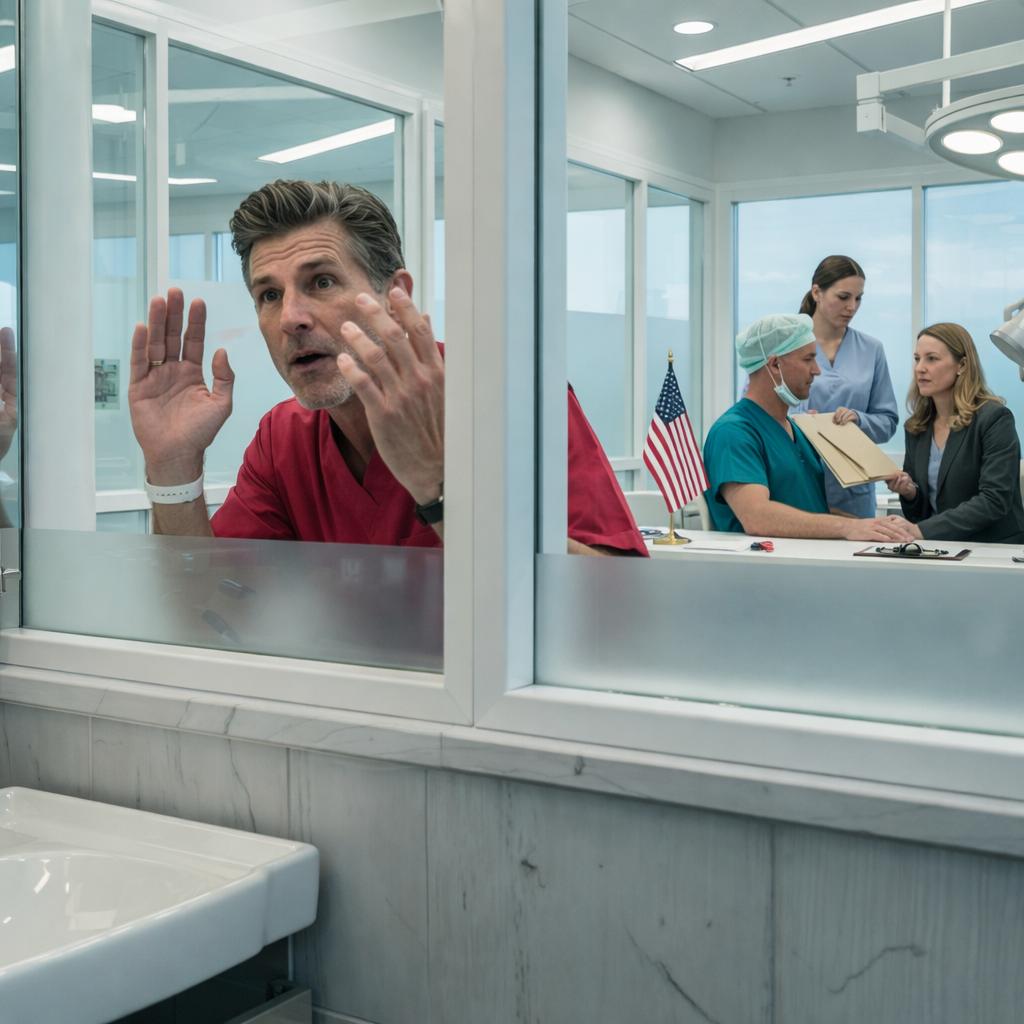
Wtedy usłyszałem głos chirurga.
Dr Julian Mercer.
Niski. Kontrolowany. Uważaj.
"Lindsay," wymamrotał, gdzieś przy mojej prawej stronie. "Koperta. Upewnij się, że jego żona dostanie go po naszej pracy."
Chwila ciszy.
"Nie może wiedzieć," dodał Mercer. "Nikt nie może."
Serce waliło mi tak mocno, że myślałem, że wyrwie się z żeber. Monitor nade mną odpowiedział nagłym skokiem, jego rytmiczne piknięcia przyspieszyły.
Głos pielęgniarki zszedł do szeptu. "Pani Brennan wie, że to nadejdzie."
"Wiem," powiedział Mercer. "Tylko upewnij się, że tego nie zobaczy."
Przeszedł mnie dreszcz, który nie miał nic wspólnego z salą operacyjną.
Próbowałem się ruszyć. Próbowałem otworzyć usta. Próbowałem powiedzieć: Jaka koperta? albo O czym ty mówisz?
Nic się nie stało.
Moje ciało nie reagowało. Mój język ważył jakby pięćdziesiąt funtów. Panika ścisnęła mi gardło, ostra i dusząca, podczas gdy umysł krzyczał w ciele, które odmawiało posłuszeństwa.
Więc zrobiłem jedyne, co mogłem.
Stałem zupełnie nieruchomo.
Pozwoliłem oddechowi się wyrównać. Zmusiłem się, by mój puls zwolnił. Udawałem, że jestem nieprzytomny, podczas gdy każdy instynkt mówił mi, że coś jest głęboko, katastrofalnie nie tak.
Pół godziny później zawieźli mnie na sali pooperacyjnej.
Do zmierzchu pakowałem torbę i znikałem bez słowa.
But I’m getting ahead of myself.
Before all of this, before the envelope and the whispers and the look on my wife’s face that would haunt me for the rest of my life, I thought I had everything figured out.
Twenty-one years of marriage.
A daughter who made me proud every single day.
A company I’d built with my own hands.
From the outside, my life looked bulletproof.
And that’s exactly why I never saw the knife coming.
I used to believe in the American dream the way people believe in gravity. Not as an idea, but as something solid and unquestionable. You work hard, you build something, you protect your family, and life rewards you with stability.
I had all the proof I needed.
Nicole and I had been married for twenty-one years. Our daughter, Mia, was nineteen and halfway through her sophomore year at the University of Colorado, studying pre-law. Smart, driven, sharper than I’d ever been at her age.
I was fifty-four and the CEO of Redstone Building Corporation, a commercial construction firm I’d grown from a regional outfit into a $32 million operation headquartered in Denver. Cherry Creek house. Reserved table at Elway’s. Broncos season tickets that everyone “joked” about wanting.
The life people post about online with captions like grateful and blessed.
The kind of life that makes you think you’re immune to betrayal.
Except somewhere along the way, my wife became a stranger.
I didn’t see it all at once. It never happens that way. It was a series of small things, each one easy to dismiss on its own.
Nicole started keeping her phone face down on the kitchen counter. Not dramatically. Casually. Like it didn’t matter. But she never used to do that.
She started stepping outside to take calls. Even in February. Even when the temperature dropped to fifteen degrees and her breath came out in white clouds.
Client dinners that ran late. Meetings that didn’t line up with calendars. A new perfume that didn’t belong to any department store I recognized.
Distance that had nothing to do with physical space.
I noticed it, felt it, and told myself I was imagining things. That I was working too much. That marriage after twenty years just settles into something quieter.
I told myself anything that meant I didn’t have to ask questions.
Back in February 2003, when I first met Nicole, none of this existed.
She was twenty years old, working as an event coordinator at a children’s hospital charity gala. I was thirty-three, wearing a rented tux and trying to look like I belonged in rooms full of donors and executives. I’d been working alongside my father for eleven years by then, learning the business, learning how to carry his expectations.
Nicole wore an emerald dress that matched her eyes. When she laughed at a stupid joke I made about load-bearing walls, something in me folded.
We talked for hours that night. About the event. About my work. About nothing important and everything important at the same time.
By November, we were married.
Nine months from meeting to vows.
Everyone told us we were rushing it. My business partner, Brandon Walsh, said I’d lost my mind. Even my mother asked if I was sure.
I didn’t care.
Nicole made me feel alive.
Twenty-one years later, that feeling was gone. Replaced by something hollow and sharp around the edges.
And I still didn’t see the truth.
The hernia happened on a Tuesday in July.
I was at our RiNo project site, a mixed-use redevelopment we were converting from an old warehouse. I’d always been hands-on, even after stepping into the CEO role. I liked being around the crews. Liked knowing what was happening with my projects firsthand.
That day, we were short-staffed. I grabbed one end of a steel I-beam to help move it.
Stupid. Reckless. A fifty-four-year-old desk jockey trying to prove he could still hang.
The pain was immediate. Sharp. Radiating low in my abdomen and down toward my groin.
I knew exactly what it was. I’d watched my father deal with the same thing years ago.
That night at dinner, I mentioned it casually. We were standing at the kitchen island, Mia up in Boulder for summer classes. Nicole was scrolling on her phone.
“I think I pulled something today,” I said. “Pretty sure it’s a hernia.”
Nicole’s head snapped up.
Aby zobaczyć pełną instrukcję gotowania, przejdź na następną stronę lub kliknij przycisk Otwórz (>) i nie zapomnij PODZIELIĆ SIĘ nią ze znajomymi na Facebooku.